Syner
- Responsibilities
- End-to-end design for web + mobileUser researchStakeholder collaboration
- Role
- Product Designer (Sole Designer)
- Timeline
- 18 months (2023–2024)
- Overview
- Designing connected experiences for field workers and office managers to track emissions and document environmental compliance at oil and gas facilities.
Challenge
Oil and gas facilities face serious regulatory pressure around emissions. When regulators detect gas leaks via satellite, facilities must prove they weren’t the source, or face penalties and legal action.
The industry had no comprehensive solution. Field workers used stopwatches and paper to time emission events. Office managers manually compiled regulatory reports from fragmented notes. The core challenge: field workers needed speed and simplicity while working outdoors, while office managers needed comprehensive documentation for regulatory submissions.
Solution
Web Platform
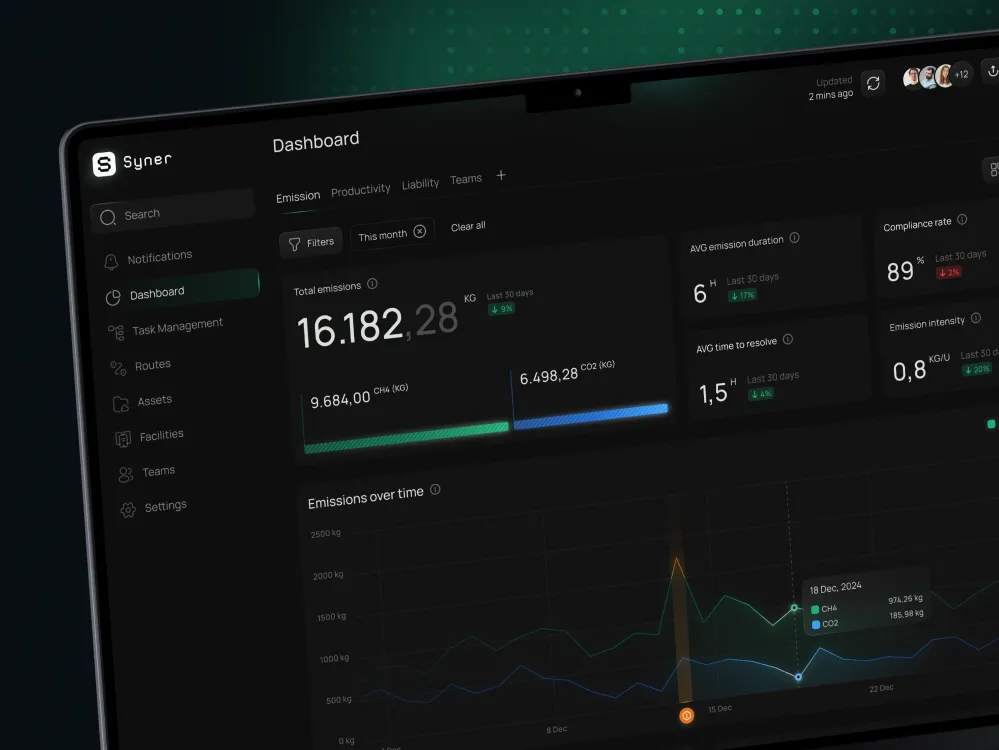
I designed separate but connected experiences where field data automatically flows into manager reports without manual transfer.
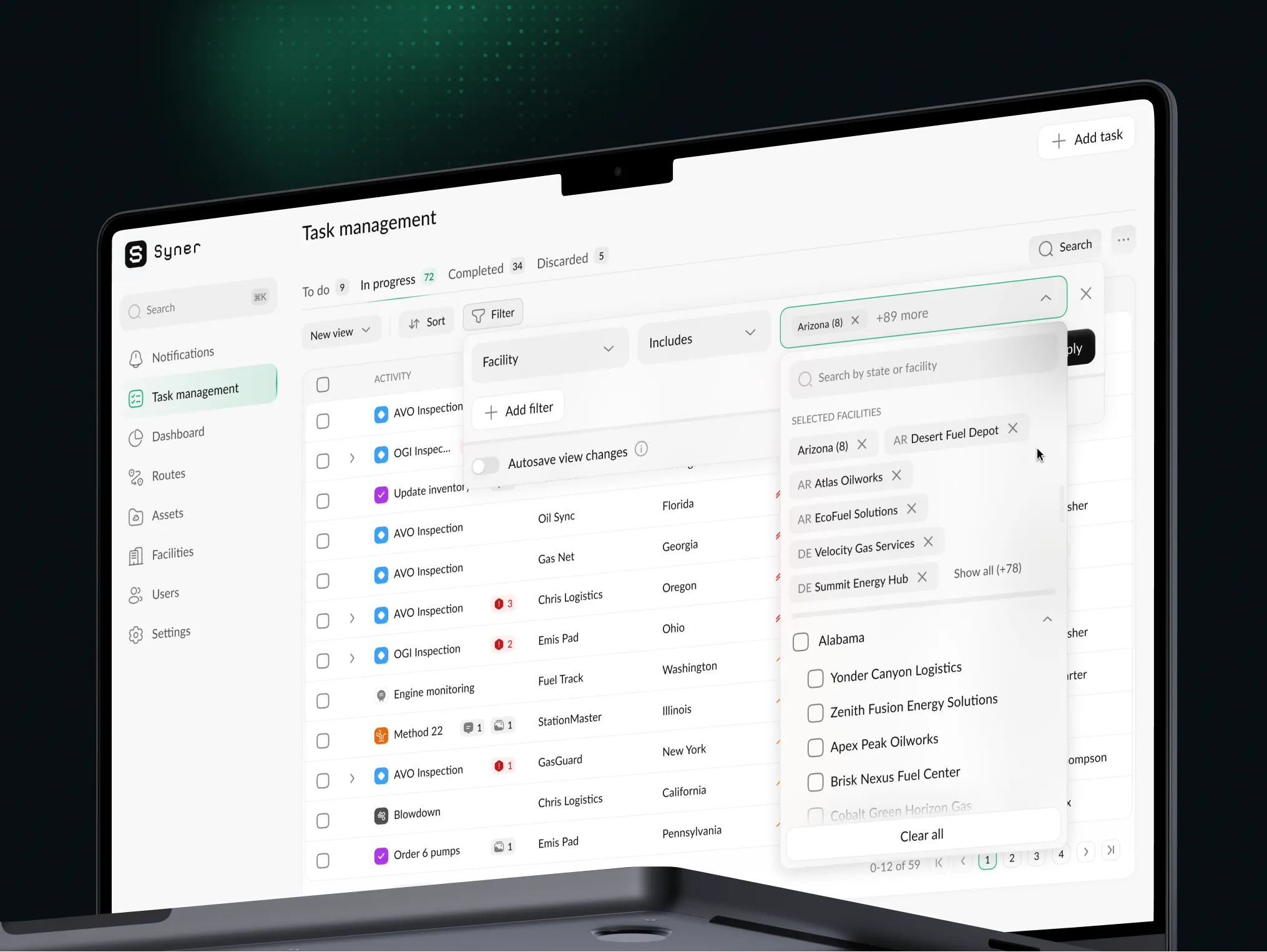
The task management system coordinates complex inspections across facilities with nested subtasks assigned to multiple workers. Task details expand in a side drawer showing facility information, regulation requirements, and repair subtasks without leaving the main workflow.
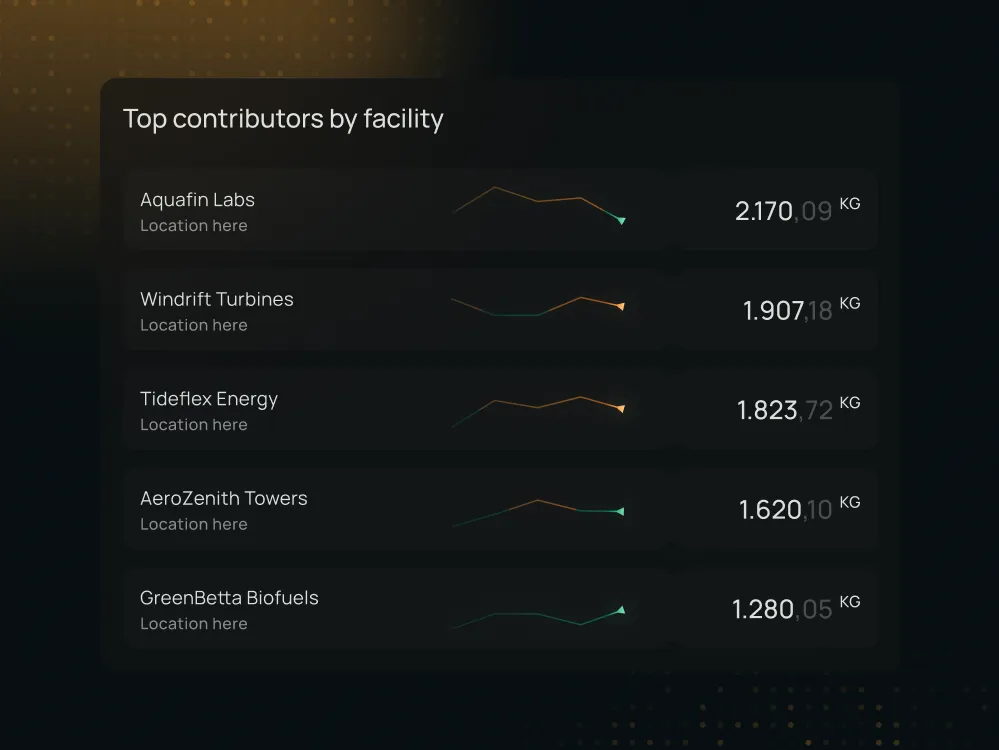
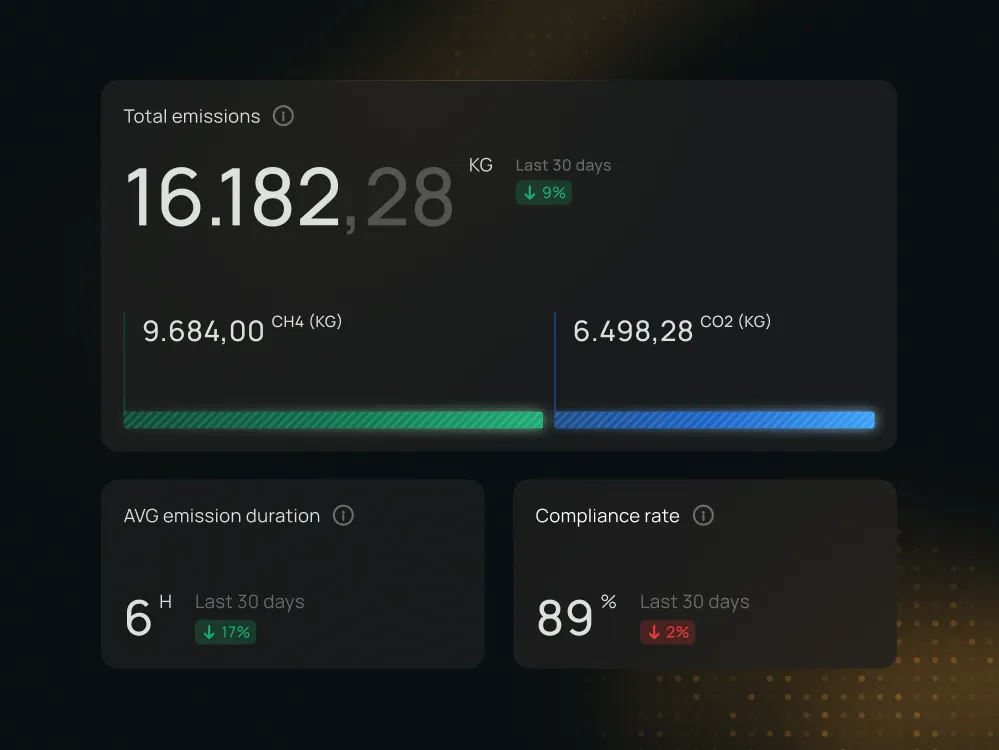
The critical feature: automated Super-Emitter reports. The dashboard monitors real-time emissions data across facilities. When regulators challenge a facility, managers generate court-ready reports in minutes: comprehensive data with timestamps and historical context that can save companies millions in penalties.
Mobile App
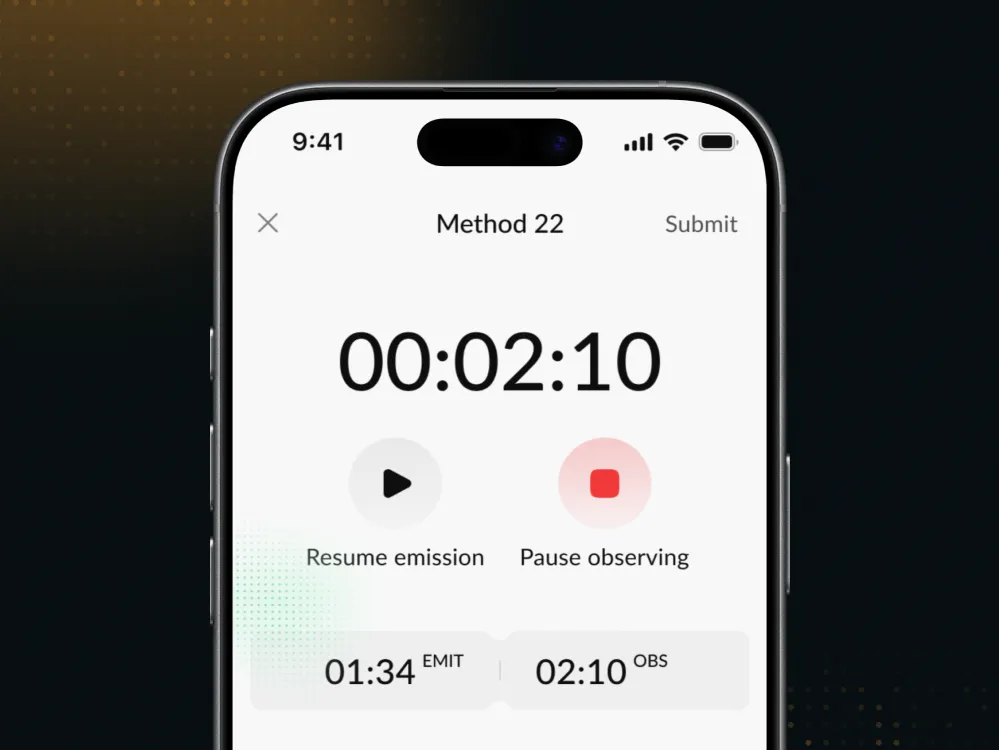
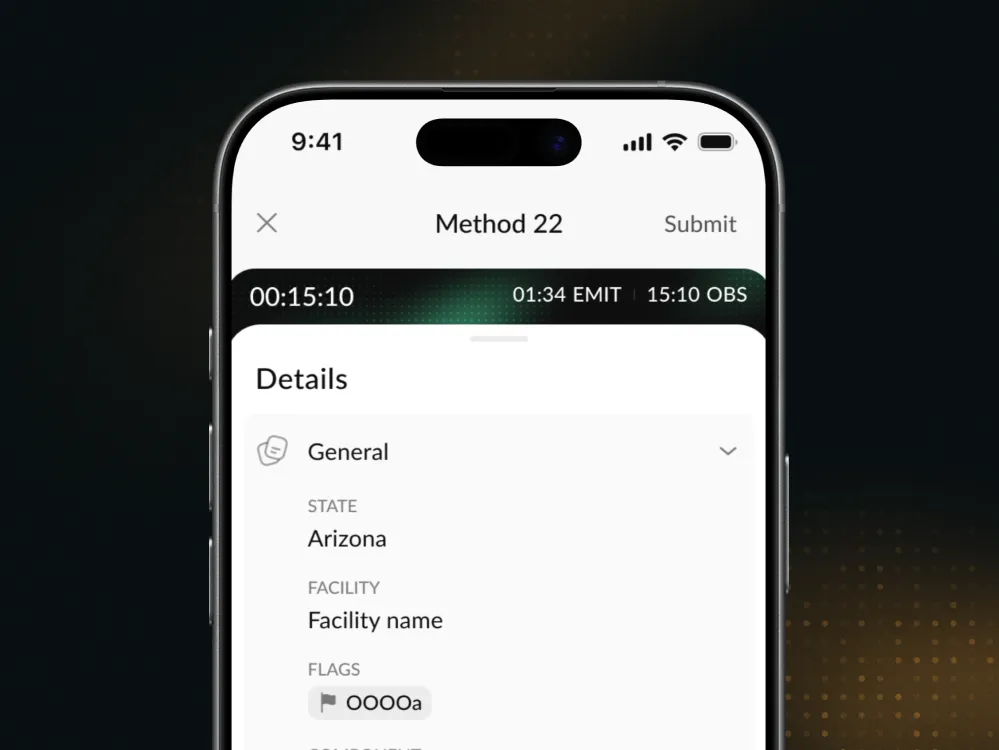
The mobile interface supports workers documenting incidents in various conditions. One-touch recording replaced manual timing, with automatic timestamps, location tagging, and guided photo capture. Full offline functionality ensures remote facilities can work without connectivity, syncing automatically when connection returns.
Impact
Field workers reported faster documentation, spending less time on paperwork and more on their core work. The connected platform eliminated communication delays between field and office: data flowed automatically without manual handoffs. Both groups noted smoother daily workflows and reduced stress around compliance requirements.
The client confirmed the platform delivered on its central goal: reliable environmental compliance management that protected the business while supporting responsible practices. After the initial work revealed broader opportunities, they extended our partnership from 100 hours to 18 months.
Key learning
Design for reality, not assumptions
Field workers timing emissions with stopwatches and paper taught me that understanding actual workflows in specialized environments reveals requirements you'd never uncover otherwise.
Observing how users work in their real conditions, with their actual tools, became the foundation for everything from interaction design to technical architecture.
Trust turns a project into a partnership
Showing real expertise early earned the client's trust, and that trust turned a 100-hour engagement into an 18-month partnership. Design opens the door – the relationship you build with a client or a team is what keeps it open.